
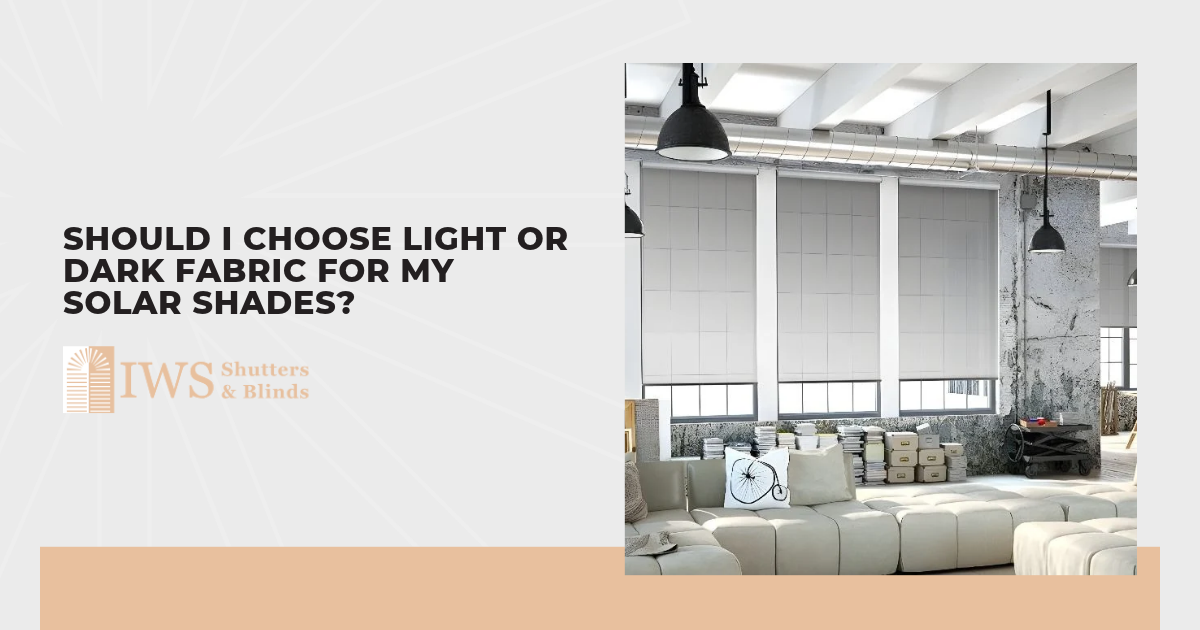
Cream might match your walls, but the color that matters most for solar shades is the one that fixes whatever bothers you about the window. I start by asking what bothers you most: afternoon heat, glare on a screen, or losing the view outside. Light fabrics reflect more solar energy and soften the light in a room. Dark fabrics usually cut glare better and give you a sharper view outside when the openness is the same. Color and weave both play a part, so check the openness on any sample you like.
To choose between light and dark fabric for your solar shades, start with these questions:
- When is light fabric the better choice?
- When is dark fabric the better choice?
- How does openness affect the color decision?
- Does fabric color change daytime or nighttime privacy?
- How can you compare light and dark samples before ordering?
If you're leaning toward a lighter color, check which direction the window faces, when the sun hits it, and what you'll be doing in the room at that time.
When Is Light Fabric the Better Choice?
Rooms that feel dim with the shades down are where light fabric earns its spot. White, cream, and pale gray soften the daylight you get while keeping the window area bright. Say you read over coffee in a breakfast nook but need relief from direct sun. Light-colored solar shades suit that space if keeping the room bright matters more to you than seeing every detail of the yard. I recommend comparing samples with the room's lights off so you can judge whether the filtered daylight feels comfortable.
Beyond brightness, light fabrics generally reflect more solar energy than comparable dark fabrics, which makes them worth a look for sunny Florida windows. Window direction matters here, because a west-facing window takes the hardest afternoon sun and a north-facing one gets far less. Glass type, fabric construction, and any reflective treatment also shape how much heat you block, so a white shade alone won't settle it. Ask for heat-control data on the exact fabric and color you're considering, ideally tested with glazing similar to yours. Manufacturer figures for one fabric and window pairing won't tell you how much cooler your room will feel, so use them to compare fabrics against each other.
Higher reflectivity has a cost: pale mesh looks bright in strong sunlight and can make the view outside look hazy. Near a television or desk, you'll notice that bright surface even when the shade is filtering direct sun. I wouldn't rule out a cream fabric you love, but I do want you to test it from your usual seat while the sun is on the window. Look at the screen, then look through the sample, and notice whether either one strains your eyes. If the brightness bothers you, compare a darker sample with the same openness before you decide.
When Is Dark Fabric the Better Choice?
Bright reflections across your television are the clearest sign to look at dark fabric. Charcoal and deep brown absorb more light and send less back toward your eyes than lighter fabrics do. With less brightness on the shade's surface, you'll find it easier to watch television or read a computer screen. In a room where screen glare interrupts your day, I put that comfort ahead of matching the shade to the paint. Color won't fix every reflection, especially if sunlight still reaches your screen through gaps beside the shade.
Glare off pool water can wash out a view fast in Florida's high summer sun. Dark mesh fades into the background when the scene outside is bright, so the view stays clear and easy to take in. If your living room overlooks a pool, garden, or patio you enjoy all day, a dark shade keeps the water and the palms in view. Openness still matters, since a tightly woven charcoal fabric blocks more of the view than an open one. Hold the sample at arm's length, because up close it looks denser than it will on the window.
Dark fabric still lets daylight in. How much depends on the weave of the specific fabric. A shade that tames glare can still let heat build up, because the fabric absorbs solar energy that warms the room. If heat and glare both bother you, ask whether the fabric has a reflective treatment, and look at the numbers for that exact fabric. Those figures will show you how well it balances the two.
How Does Openness Affect the Color Decision?
When I help someone choose between two colors, the first thing I check is the weave. Openness comes first for me and color second. Openness is the percentage of open space between the threads, and solar shades usually come in 1%, 3%, 5%, and 10% options. Going from 1% to 10% brings you more of the yard and more light. Openness often changes your view more than color does, so a light 10% fabric can show more of the outdoors than a dark 1% one.
Openness doesn't tell you how much light actually comes through, though. Some light passes through the yarns themselves, so two fabrics marked 3% can make your room look noticeably different. Pale yarns usually pass more light than dark yarns in a comparable fabric. Visible light transmission is the number I ask about, since it counts the yarns as well as the gaps. Once you have that figure, you'll see that a 3% fabric lets in more than 3% of the light.
Light and dark samples from the same collection at the same openness make for a fair color comparison. Otherwise the weave can sway your opinion of the color. In a home office with strong glare, I start with tighter weaves, then pick the color that makes the screen comfortable. Open weaves usually fit rooms where the view matters more, as long as the light stays comfortable. Changing the weave is my next move when neither color works at the first openness, and it often saves a favorite shade
Does Fabric Color Change Daytime or Nighttime Privacy?
Dark fabric looks more concealing on a sample card, but daytime privacy comes mostly from openness and the brightness outside. During daylight hours, what people see from outside depends on the fabric's openness and the difference between indoor and outdoor brightness. Someone standing in a brightly lit yard usually has trouble seeing into a darker room, though lighting and viewing angle can change that. For windows facing a sidewalk or a nearby home, I verify daytime privacy myself. Looking from outside under realistic conditions works best, ideally with a full-size demonstration, since a small swatch won't show how private the whole window will be.
After sunset, solar shades need a separate privacy plan if you want to stop views into the room. Once indoor lights are brighter than the surroundings outside, people can see through light and dark mesh alike. Even a low-openness fabric shows silhouettes and interior details, so charcoal instead of cream won't solve the problem. Bedrooms and bathrooms are where I'm most careful, because a fabric that seems private in the afternoon leaves you exposed after dark. Afternoon privacy doesn't carry over to night.
Opaque roller shades or privacy drapery give those rooms the extra coverage they need. With a dual roller system, a solar fabric works during the day and a separate privacy shade comes down at night. Before ordering either layer, I confirm the window has enough mounting space and that the coverage blocks views around the edges. With nighttime privacy handled separately, you can choose the solar fabric's color around the daylight, glare control, and outdoor view you prefer.
How Can I Compare Light and Dark Samples Before Ordering?
Samples look different at the window than they do on a table, so I judge them in the light you actually live with. These checks show you how each color holds up at your window, especially during the hours when glare or heat bothers you.
- Match the fabric and openness: Start with light and dark colors from the same collection at the same openness level. Keeping those details consistent helps you judge the color without a different weave influencing the comparison.
- Ask for larger samples: Request the largest samples available, or ask whether a demonstration shade is an option. Small swatches help with color, but they're harder to judge for glare, outdoor visibility, and the appearance of a covered window.
- Check during the problem hours: Compare both colors when sunlight normally makes the room uncomfortable, since that's when the choice matters most. Revisit them at another time of day to see whether your preference changes as the light shifts.
- Sit where you normally sit: View each sample from your desk, sofa, or dining chair, since standing directly against the glass shows you something different. Turn on nearby screens and check whether either fabric appears distractingly bright from your usual position.
- Compare nearby colors and finishes: Hold each sample near the window trim, wall paint, and any drapery you plan to keep. Check it against the glass as well, because light passing through the weave can change its appearance.
- Read the performance details: Ask for visible light transmission and solar performance data for the exact colors you're considering. Use those figures alongside your observations, since a swatch comparison can't establish how much heat a finished shade will control.
A sample that gives you a clearer view but leaves too much glare may only need a different openness. Keep a short note of what worked and what bothered you so the final choice reflects how you use the room.
Conclusion
When it's time to decide, you'll get your clearest answer at the hour when the window bothers you most. Charcoal that makes your afternoon screen time easier on the eyes earns a spot even when cream was your first choice. Light fabric that gives you daylight you enjoy and a view you're happy with is worth keeping too. Heat usually points toward light and glare or the view toward dark, but your samples at your window settle it. Nighttime privacy takes a separate layer after dark, and with that handled, you can pick the color that suits your daylight.