
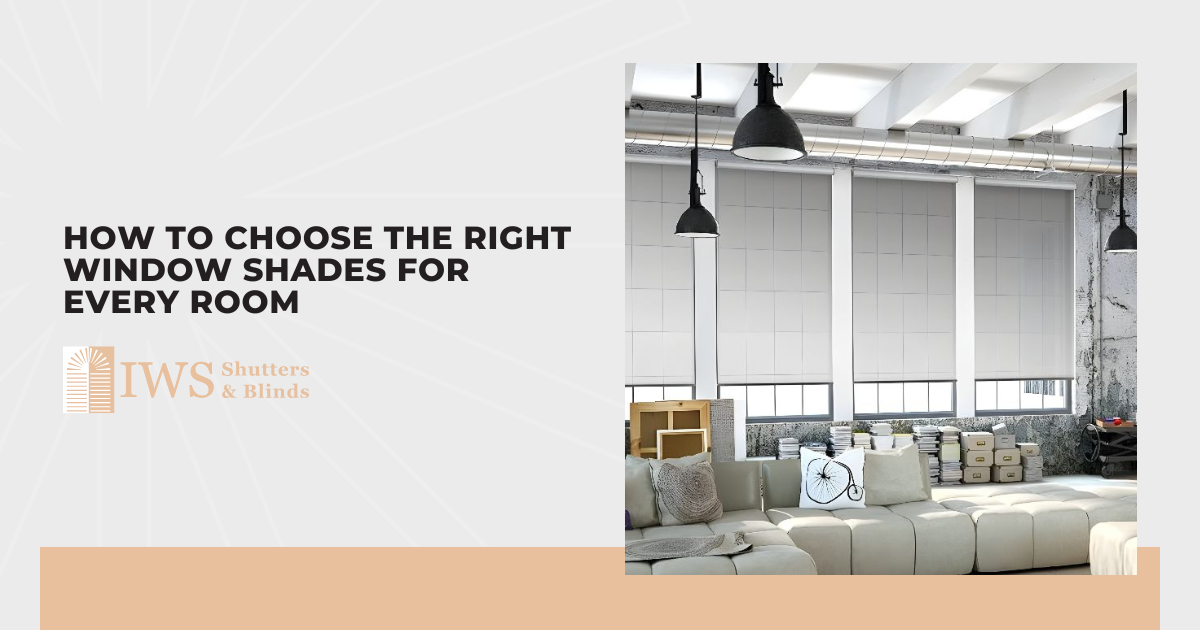
The right window shade for your home is rarely the first one that catches your eye in a showroom. A shade that looks beautiful in a display setting can fail completely once it's installed if the light control is off or the material can't handle the conditions of the room. As a window treatments expert, I've worked with enough clients to know that the ones who get it right understood what their rooms actually needed before they started shopping. Skipping that step is what leads to shades that look fine but never quite work the way they should.
Every room in your home has its own set of requirements, and the best window shades are the ones chosen with those requirements in mind. A bedroom needs something completely different from a kitchen, and what works beautifully in a living room can be completely wrong for a bathroom. Narrowing down the right window shade for any room starts with asking the right questions.
Choosing the right window shades for every room comes down to these key factors:
- Room purpose
- Light control and privacy
- Moisture and humidity resistance
- Energy efficiency
- Style and aesthetics
- Child and pet safety
- Motorization and smart home integration
Keep reading to find out how each of these factors plays out in practice across every room in your home.
Room Purpose
The function of a room is the first thing to consider before looking at any window shade options. A bedroom prioritizes privacy and light control for sleep, while a home office needs glare reduction without feeling dark or closed off. A kitchen calls for something easy to clean and resistant to moisture and grease. Getting clear on what a room is actually used for makes every other decision about window shades significantly easier.
Privacy needs, light requirements, and moisture exposure all vary from room to room. A shade that performs well in your living room can be completely wrong for your bathroom. Bedrooms and nurseries benefit from higher levels of light blockage, while living rooms typically call for something that softens natural light without eliminating it. Knowing these distinctions upfront keeps you from choosing a shade that looks right but doesn't deliver what the room actually needs.
Think about how each room in your home gets used before you start browsing options. Consider the direction your windows face, how much natural light the room receives, and whether privacy is a daytime or nighttime concern. Those three questions alone will narrow down your options significantly.
Light Control and Privacy
Window shades come in a wide range of light filtration options, from sheer to blackout, and knowing where each room falls on that spectrum is key. Sheer shades diffuse natural light while maintaining an open, airy feel, making them a good fit for living rooms and dining areas. Light filtering shades soften incoming light without fully blocking it, which works well in home offices and common areas. Blackout shades are the right choice for bedrooms, nurseries, and media rooms where controlling light is a priority.
Privacy needs shift depending on the time of day and where your windows face. In my experience, sheer shades offer very little privacy at night when interior lights are on, even though they feel perfectly private during the day. Layering a sheer shade with a light filtering or blackout option gives you the flexibility to control both light and privacy independently.
Top-down bottom-up shades are worth considering in rooms where you want natural light from above without sacrificing privacy at eye level. A bathroom window or a street-facing living room are both situations where that kind of flexibility makes a real difference. Solar shades are another option worth exploring if your rooms get a lot of direct sun exposure, as they reduce glare and heat gain while maintaining an outward view. The right level of light control for each room is what makes the difference between shades that enhance your space and ones that compromise it.
Moisture and Humidity Resistance
Not every window shade material holds up equally well in rooms exposed to heat, humidity, and moisture. Bathrooms, kitchens, and laundry rooms present a unique challenge because the conditions in those spaces can cause certain materials to warp, mold, or deteriorate far faster than they would in a drier environment. Choosing the wrong material for a high-humidity room is a mistake that shows up quickly once the shades are installed. Getting this right from the start saves you from replacing shades far sooner than you should have to.
Roller shades made from moisture-resistant materials are among the most popular choices for humidity-prone rooms, as they're easy to wipe down and hold up well under consistent exposure to steam and moisture. Aluminum and vinyl shades are also strong options, as both materials are completely impervious to moisture and easy to clean. Cellular shades made from moisture-resistant fabrics are worth considering if you want softer light filtration in a humid space without sacrificing durability. Avoid natural fabric shades and bamboo in these environments, as both are prone to damage when exposed to consistent moisture over time.
Your kitchen deserves particular attention when it comes to material selection, as it's exposed to both humidity from cooking and grease that can build up on shade surfaces. Roller shades with a wipeable, moisture-resistant coating are a practical and stylish choice that holds up well in that environment. Solar shades work particularly well in kitchen spaces that face direct sunlight, reducing heat and glare without adding a material that's difficult to keep clean. Window shades chosen with the room's specific conditions in mind will always outlast and outperform ones that weren't.
Energy Efficiency
If your energy bills feel higher than they should be, your window shades might be part of the problem. In warmer climates, windows are responsible for a significant amount of heat gain, and the right shades can reduce that before it ever enters your room. Cellular shades, also known as honeycomb shades, are widely regarded as the most energy-efficient option because their structure traps air and creates insulation between the window and the room. Solar shades are another strong option for your sun-facing windows, reducing glare and heat gain while still letting natural light in.
The direction your windows face has a direct impact on which shades will work hardest for you. South and west-facing windows receive the most direct sunlight and benefit most from shades with higher solar heat gain coefficients. North-facing windows get less direct sun and can typically work with lighter shades that prioritize light diffusion. East-facing windows get strong morning sun, so a shade that handles direct early light without overheating your room is worth prioritizing.
Shades handle heat at the window, but they're only one part of your home's envelope. If cooling costs stay high after upgrading, the roof is usually the next place to look, homeowners weighing a
roof replacement manassas va often find that better attic insulation and ventilation do as much for comfort as the shades themselves.
Pairing the right shade with your window's orientation is what makes the biggest difference in energy performance. The savings add up particularly in rooms that receive a lot of direct sun during peak hours. Choosing with energy efficiency in mind keeps your home more comfortable and your cooling costs lower year round.
Style and Aesthetics
Aesthetics matter more than most people give them credit for when it comes to window shades. The color, texture, and opacity of your shades all contribute to the overall feel of the room. Treating aesthetics as an afterthought almost always shows in the finished result.
Neutral shades in white, ivory, and gray complement virtually any color palette without competing with your existing design. Bolder colors and patterns can work as a deliberate design statement, but think carefully about how they'll interact with your furniture and walls. Roller shades suit contemporary interiors, while Roman shades bring a softer feel that works well in bedrooms and living rooms. Woven wood shades add warmth and texture if your space already has natural materials like rattan or hardwood.
Fabric choice matters just as much as color when it comes to how your shades read in a room. From my perspective, the shades that look most intentional are the ones chosen to complement the other soft furnishings rather than simply match the wall color. Sheer fabrics keep a room feeling open and airy, while heavier materials add depth and warmth. Balancing functionality with aesthetics is what makes a window shade feel like a design choice rather than a practical necessity.
Child and Pet Safety
If you have young children or pets at home, corded window shades are a safety risk worth taking seriously. Loose cords create a strangulation hazard for young children and can injure or trap pets who get tangled in them. The industry has made significant strides in cordless and motorized options that eliminate this risk entirely. Making the switch is a decision worth prioritizing, especially in rooms where your children and pets spend the most time.
Cordless shades are the most straightforward solution, operating with a simple push or pull mechanism that requires no cords at all. They're available across virtually every shade style and price point, so switching doesn't mean sacrificing the look you want. Motorized shades take safety a step further by eliminating manual operation entirely, which is particularly useful on windows that are hard to reach. Both options meet current child safety standards and are worth prioritizing in any room your children or pets access regularly.
If you currently have corded shades in your home, retrofit solutions are available that can reduce the hazard without a full replacement. Cord wind-ups, cord cleats, and tension devices keep cords secured and out of reach when the shades aren't being adjusted. Bedrooms and playrooms should be your first priority, as those are the rooms where unsupervised access is most likely. A window treatments professional can walk you through the safest options for your specific situation.
Motorization and Smart Home Integration
Motorized window shades have moved beyond a luxury feature and are now a practical upgrade worth considering for everyday convenience. With a remote, a wall switch, or a smartphone app, you can adjust every shade in your home without leaving your seat. For windows that are hard to reach or installed in awkward positions, motorization is often the most practical solution available. Programming your shades to open and close at specific times also means your home is managing light and privacy automatically, even when you're not there.
Smart home integration takes motorization a step further by connecting your shades to platforms like Google Home, Amazon Alexa, and Apple HomeKit. Voice control lets you adjust individual shades or entire rooms with a simple command. Pairing motorized shades with a smart thermostat creates a system that manages both light and temperature simultaneously, which can have a noticeable impact on your energy bills. Most major window shade brands now offer motorized options compatible with the most widely used smart home platforms.
Battery-powered and hardwired motorization options are both worth understanding before you commit. From my experience working with clients on smart home integrations, battery-powered motors are the easier and more flexible option for most homes since they don't require any electrical work. Hardwired systems offer more reliable performance but involve installation work best handled by a professional. Knowing which option suits your home before you buy saves you from a costly switch later on.
Conclusion
The right window shades for every room in your home do a lot more than look good on the wall. Light control, privacy, moisture resistance, energy efficiency, safety, and smart home compatibility all play a role in determining whether the shades you choose actually deliver on what each room needs. Working through each of these factors room by room is what separates a home that feels intentional and comfortable from one that looks fine on the surface but never quite comes together. When every room has shades that were chosen with purpose, the difference in how your home looks and feels is hard to miss.