
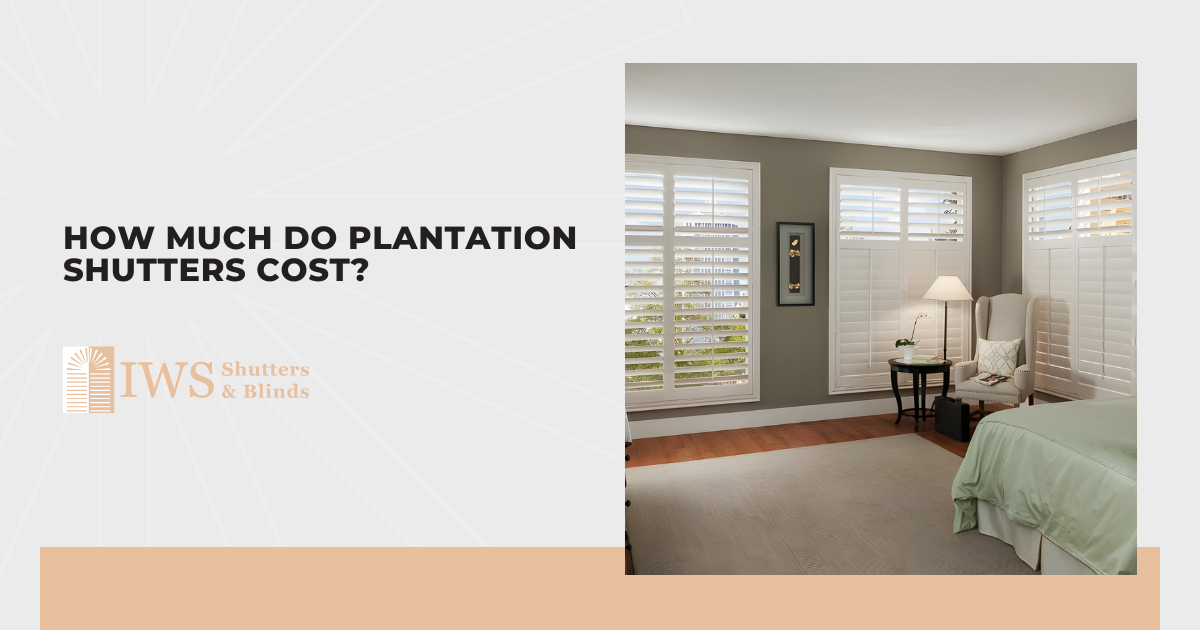
Plantation shutters vary in cost based on material choice, window size, design details, and installation requirements. In my experience designing and installing various window treatments, I see pricing change significantly depending on how customized the shutters need to be and the conditions of each window. This is why two homes with similar windows can receive very different quotes.
Below, I break down the average cost of plantation shutters, the main factors that affect pricing, and what to consider when budgeting for them.
- Average cost of plantation shutters
- What affects the cost of plantation shutters
- How to budget for plantation shutters
Average Cost of Plantation Shutters
Pricing for plantation shutters is typically calculated per window and can vary widely depending on material, window size, and installation requirements. The ranges shown here reflect common pricing for professionally measured and installed shutters, with final costs depending on the specifics of each home.
| Shutter Type | Approximate Cost per Window (Installed) | Best For |
|---|---|---|
| Vinyl plantation shutters | $150 – $450 | Most budget-friendly option for standard windows |
| Composite plantation shutters | $350 – $900 | Mid-range option with durability and consistent appearance |
| Wood plantation shutters | $600 – $1,500+ | Premium material with higher customization costs |
| Specialty shapes or oversized windows | $900 – $2,000+ | Custom fabrication and more complex installation |
These price ranges are approximate and meant to set realistic expectations, not provide an exact quote. Because plantation shutters are custom-made, pricing is typically calculated per window and can change based on dimensions, material selection, and installation complexity.
What Affects the Cost of Plantation Shutters
The cost of plantation shutters is influenced by several factors that go beyond material alone. Understanding these variables helps explain why pricing can vary significantly from one home to another.
Material Type
One of the first things that influences pricing is the material used to build the shutters. Vinyl, composite, and wood plantation shutters all fall into different price ranges based on how they’re constructed and how they perform over time.
Vinyl is typically the most affordable option, composite sits in the middle due to reinforced construction, and wood costs the most because of natural material sourcing and finishing requirements. Material choice often sets the baseline price before design and installation factors are added.
Window Size and Shape
Larger windows require more material and longer fabrication times, which increases cost. Standard rectangular windows are the most cost-efficient because they can be manufactured using common panel sizes.
Pricing increases when windows fall outside standard dimensions. Arches, bay windows, corner windows, and sliding glass doors require custom fabrication and specialized frames, which adds both material and labor costs.
Panel Configuration and Louver Size
How the shutter is divided across a window opening affects overall pricing. Single-panel designs are generally less expensive, while multi-panel layouts require additional hinges, frames, and alignment during installation.
Louver size also matters. Common options include 2½-inch, 3½-inch, and 4½-inch louvers, with larger louvers costing more because they require thicker material and added reinforcement to maintain stability.
Frame Style and Mounting Type
The frame surrounding the shutter impacts cost based on depth and design. Shallow or basic frame profiles use less material, while deeper frames or decorative trim options increase fabrication and installation time.
The mounting method also plays a role. Inside mounts require precise measurements and sufficient window depth, while outside mounts often need wider frames to fully cover the opening and create a finished appearance.
Customization and Design Options
Finish selection has a noticeable impact on cost because it affects how the shutters are produced. Standard white finishes are the most cost-effective since they follow a streamlined manufacturing process, while custom paint colors or stained finishes require additional preparation, finishing time, and quality control.
Design features also influence pricing. Options such as divider rails, hidden tilt rods, or offset tilt rods add cost because they require extra components, more precise fabrication, and additional installation steps, even though they don’t change how the shutters function.
Installation Requirements
Labor costs are influenced by how straightforward the installation is, not just the shutters themselves. Homes with square, level window openings and consistent framing allow installers to work efficiently, which helps keep installation time and cost predictable.
Older homes often introduce challenges such as uneven walls, out-of-square openings, or trim that needs to be worked around. In these cases, additional fitting, shimming, and alignment are required to ensure the shutters open, close, and sit correctly, which increases installation time and overall cost.
Location and Regional Variations
Where the home is located also affects pricing due to differences in labor rates and local demand. In Florida, pricing is often influenced by the need for materials that perform well in heat, humidity, and coastal environments.
Homes near the coast or in high-humidity areas may require material upgrades or additional installation considerations. Local permitting, HOA guidelines, and installer availability can also influence pricing across different parts of the state.
How to Budget for Plantation Shutters
Budgeting for plantation shutters starts with understanding where costs add up and how to prioritize your investment. I always recommend having a clear plan before choosing materials or design options, since that makes it much easier to stay within budget.
- Start with the number of windows you want to cover. Plantation shutters are typically priced per window, so the total number of openings is the biggest driver of overall cost. Large homes or homes with many windows should expect a higher total investment, even if individual windows are standard sizes.
- Prioritize high-visibility or high-use rooms first. Living rooms, kitchens, and primary bedrooms are often the best places to start if you’re working within a budget. Shutters in these spaces deliver the most visual impact and everyday function.
- Plan for material and design choices early. Material type, louver size, and frame style can shift pricing quickly. Locking in these decisions early helps keep estimates accurate and prevents upgrades from pushing costs beyond your target range.
- Account for installation and custom requirements. Older homes, specialty window shapes, or uneven openings can increase installation costs. Factoring this in upfront helps avoid underestimating the final price.
- Consider phased installation if needed. Installing shutters in stages can spread costs over time without compromising quality. This approach allows you to invest in custom shutters while staying within a comfortable budget.
With a clear understanding of priorities and cost drivers, budgeting for plantation shutters becomes much more predictable. Planning ahead allows you to balance design, function, and long-term value without unnecessary compromises.
Conclusion
Plantation shutters are a custom investment, and the final cost depends on the choices you make along the way. When you understand what drives pricing and plan your budget around those factors, it’s much easier to avoid surprises. I always encourage homeowners to focus on long-term value, not just upfront cost, especially when shutters are being custom-built for your space. With the right planning and guidance, plantation shutters can be a durable, functional upgrade that fits both your home and your budget.